Valor | Energy Connection – Mar. 9, 2026

March 9, 2026 Edition

At Valor, our goal is to keep you informed of the latest news and updates from the oil and gas industry. We are committed to sharing the insights and knowledge that our team gathers to help you stay ahead in this dynamic sector. From mergers and acquisitions to regulatory changes and technological advancements, we cover all the key developments that impact the industry. Stay tuned for weekly updates to keep you well-informed.

  • Crude oil prices surpass $100 a barrel as Middle East conflict disrupts supply
  • Summary: Oil prices eclipsed $100 per barrel for the first time since 2022 as Brent surged 16.5% to $107.97 and WTI reached $106.22 following intensified conflict in the Middle East. The disruption of the Strait of Hormuz has stranded 15 million barrels of daily supply, forcing producers like Iraq and Kuwait to cut output as storage capacities hit their limits. Domestic energy costs spiked alongside futures, with U.S. gas prices rising 47 cents to $3.45 a gallon while natural gas rose to $3.33 per 1,000 cubic feet.
  • Read more
  • U.S drillers add oil rigs as WTI jumps 14%
  • Summary: The U.S. rig count rose by one to 551 this week as oil rigs increased by four to 411, their highest level since February. While gas rigs fell by two to 132, WTI and Brent crude prices surged over 20% weekly to $92.22 and $94.10 respectively, driven by the effective closure of the Strait of Hormuz. Despite the price spike, weekly domestic crude production edged down by 6,000 bpd to 13.696 million bpd, though Frac Spread completions rose by seven crews as the Permian Basin reached 241 active rigs.
  • Read more
  • Permian Resources forecasts 2026 oil production of up to 192,000 barrels per day
  • Summary: Permian Resources forecast 2026 oil production between 186,000 and 192,000 bpd following a fourth quarter average of 188,633 bpd and a 14% reduction in costs to $700 per foot. The company plans to spend $1.75 billion to $1.95 billion in capital expenditures to turn in line 250 gross wells, with 65% of activity focused in New Mexico. As the second largest Permian pure-play, the firm holds 480,000 net acres and has the financial capacity to pursue up to $3 billion in additional acquisitions through 2027 without significant debt.
  • Read more
  • G7 finance ministers meet to discuss releasing emergency oil reserves
  • Summary: G7 finance ministers held emergency talks on March 9, 2026, to discuss a coordinated release of 300 to 400 million barrels of oil from IEA strategic reserves. The meeting followed a 25% surge in Brent crude to a high of $119.50 per barrel, triggered by the closure of the Strait of Hormuz and strikes on Gulf energy infrastructure. While the proposed release represents roughly 30% of global reserves, markets remained volatile as Japan’s Nikkei 225 plummeted 5% and European indexes fell over 1.4% amid fears of an unprecedented global energy crisis.
  • Read more
  • OPEC+ agrees to modest oil output boost amid shipping disruptions
  • Summary: OPEC+ agreed to a modest 206,000 bpd production increase for April, ending a three-month pause even as disruptions to key shipping routes have constrained crude flows. Although some members have spare capacity, limited transit through the Strait of Hormuz, a corridor for about 20% of global oil, has reduced Gulf shipments and lifted Brent crude toward $80 per barrel. Analysts say that this roughly 0.2% supply boost is unlikely to stabilize markets if navigation challenges persist, with prices potentially rising above $100 per barrel if disruptions continue.
  • Read more
  • Texas leads nation again as oil and natural gas output hits all-time high
  • Summary: Texas dominated the U.S. energy sector in 2025, producing a record 2.1 billion barrels of oil and 13.5 trillion cubic feet of natural gas while supporting 476,777 direct jobs. The industry’s $385 billion direct Gross Regional Product accounted for 36% of the state’s economy, with average annual oil and gas wages reaching $133,439. Nationally, the sector sustained over 2 million direct jobs and purchased $722 billion in goods and services, as U.S. LNG exports reached 89.1 million metric tons to support global allies.
  • Read more
  • LNG futures climb 7% for the week as Middle East crisis continues
  • Summary: U.S. LNG futures rose 3.5% on Friday to $3.05 per MMBtu, marking a 7% weekly gain as conflict in the Middle East disrupted global energy markets. While the shutdown of Qatar’s Ras Laffan plant triggered massive price spikes in Europe and Asia, U.S. prices remained relatively stable due to domestic energy independence and high production levels. Despite geopolitical “war premiums” and cooler weather driving recent demand, warmer forecasts for the coming week are expected to limit further domestic price increases.
  • Read more
  • Crude oil prices pressured by bearish EIA inventory report
  • Summary: WTI crude fell 0.74% to $90.35 following an EIA report showing U.S. crude inventories rose by 3.48 million barrels to a nine-month high, exceeding the 3.0-million-barrel build expected by analysts. Despite the bearish domestic data, gasoline reached a 19.5-month high as Iranian threats to “set fire” to ships in the Strait of Hormuz drove a $18 per barrel geopolitical risk premium. Global supply remains constrained by the closure of the Ju’aymah terminal and a major fire at the UAE’s Fujairah hub, even as OPEC+ agreed to a larger-than-expected 206,000 bpd output boost for April.
  • Read more

Contact Valor Today

Contact us today if you need help outsourcing your oil and gas operations.

The information provided by Valor in this blog is for general informational purposes only, not to provide specific recommendations or legal or tax-related advice. The blog/website should not be used as a substitute for competent legal advice from a licensed professional attorney in your state.

Energy Tech Priorities for 2026: Where Leaders Should Focus Now

As the energy sector heads into 2026, technology decisions are becoming less about experimentation and more about operational clarity. Operators, mineral rights owners, and finance teams are under pressure to move faster, operate leaner, and make decisions with incomplete information — all while market complexity continues to increase.

The real challenge isn’t market volatility; it’s the operational friction created by legacy systems and fragmented data. Technology that centralizes information and reduces manual processes is becoming essential for scale.

Based on what we’re seeing across the industry and broader benchmarks, these five priorities are shaping the next phase of energy technology adoption.

1. From Automation to Insight

For years, the focus has been on automating simple workflows. In 2026, the differentiator is insight quality. Automation is now table stakes — clarity is the advantage.

Energy leaders are prioritizing platforms that don’t just “run” but actually surface the right information at the right time. This is where oil and gas outsourcing is evolving; it’s no longer just about offloading tasks, but about gaining access to AI-driven systems that flag risks in mineral management before they impact the balance sheet.

Priority: Real-time visibility into assets and revenue.
Goal: Reducing reconciliation gaps across owners, operators, and partners.

2. Transparency as a Competitive Requirement

Transparency is no longer a “nice to have.” Mineral rights and royalty stakeholders now expect clear, auditable views into ownership, payments, and performance.

In an increasingly complex and highly scrutinized energy landscape, technology that enables direct visibility into data helps build trust. When stakeholders can see the data themselves, the support burden on your team drops, and long-term relationships are strengthened.

3. Purpose-Built Beats One-Size-Fits-All

Many organizations are reassessing broad, monolithic software suites that promise everything but deliver limited flexibility.

We’re seeing a shift toward purpose-built solutions designed specifically for minerals and royalties — tools that reflect how the business actually operates, rather than forcing teams to adapt to generic systems.

In 2026, specialization increasingly outperforms scale. This has contributed to growth in oil and gas back-office outsourcing models that combine specialized technology with operational execution, helping firms reduce total cost of ownership while maintaining accuracy and control.

4. AI That Supports Decisions (Not Just Dashboards)

AI is moving from experimentation to application. The most valuable use cases aren’t flashy — they’re practical:

Identifying anomalies in revenue and tax reporting before they become liabilities.
Flagging risks and infrastructure opportunities earlier in the cycle.
Supporting faster decision-making through AI-driven pattern recognition embedded directly in operational systems

Non-technical, explainable AI will win over black-box solutions.

5. Owner Engagement as a Strategic Advantage

Engaged owners are informed owners. Platforms that improve communication and visibility for mineral rights owners don’t just reduce support burdens—they improve operational efficiency and strengthen reputation.

As ownership structures become more complex, specialized mineral management technology is playing a larger role in operational efficiency, allowing for seamless interactions between owners and operators.


Looking Ahead

The energy companies that succeed in 2026 won’t be the ones with the most technology — they’ll be the ones with the right technology, aligned to how their business actually works.

The coming year presents an opportunity to simplify complexity, reduce friction, and invest in systems that deliver reliable, decision-ready information.

That’s what Valor’s platform is built to do.

Contact Valor Today

Contact us today if you need help see how our mineral management solutions can help you organize, optimize, and monitor your assets.

The information provided by Valor in this blog is for general informational purposes only, not to provide specific recommendations or legal or tax-related advice. The blog/website should not be used as a substitute for competent legal advice from a licensed professional attorney in your state.

What the “Big, Beautiful Bill” Means for Oil, Gas, and EVs

On May 22, 2025, the U.S. House of Representatives passed a sweeping budget reconciliation package known informally as the “Big, Beautiful Bill.” Now under Senate review, the 1,100+ page bill includes a range of provisions that affect multiple energy sectors, including oil and gas, electric vehicles (EVs), and renewable energy.

Here’s a factual summary of how the bill intersects with U.S. energy policy and programs:


Oil and Gas Provisions

  • Drilling Expansion: The bill reinstates and accelerates oil and gas leasing on federal lands and offshore waters. It also shortens permitting timelines for new drilling projects.
  • Regulatory Revisions: Provisions reduce the administrative review period for environmental assessments related to oil and gas activity, in alignment with NEPA (National Environmental Policy Act) reforms.
  • Federal Royalties: The bill freezes current royalty rates for federal oil and gas leases and blocks increases that had been proposed under the Inflation Reduction Act.

Power Generation and Renewables

  • Subsidy Repeals: The legislation repeals or phases out several tax credits and subsidies for renewable energy, including:
    • – The Production Tax Credit (PTC)
    • – The Investment Tax Credit (ITC)
    • – Energy efficiency incentive programs for wind, solar, geothermal, and bioenergy
  • Grid Reliability Provisions: The bill includes funding and directive language for improving power grid reliability, with a focus on dispatchable energy resources, which may include natural gas and coal.

Electric Vehicles (EVs)

  • EV Tax Credit Rollback: The bill repeals the $7,500 federal tax credit for new EV purchases and eliminates additional incentives for used EVs or domestically sourced batteries.
  • Charging Infrastructure: Federal funding for EV charging infrastructure, as outlined in previous legislation, is rescinded or reallocated.
  • Fuel Economy Standards: The bill limits the authority of the EPA and DOT to enforce stricter fuel economy standards through 2035.

  • Carbon Capture: Tax credits for carbon capture and storage (45Q credits) are maintained at reduced levels, and new qualifications are added.
  • Strategic Petroleum Reserve (SPR): The bill includes measures to require minimum capacity levels and outlines approval processes for drawdowns.
  • State Preemption: A section of the bill prevents states from enacting stricter emissions or fuel regulations that exceed federal standards until 2035.

Current Status

As of June 2025:

  • – The bill has passed the House and is awaiting action in the Senate.
  • – Some provisions—particularly around state-level EV mandates and federal land leasing—are expected to be the subject of negotiations or amendments.

After the Senate floor vote

  • The bill has passed the House (May 22), but still requires approval in the Senate. Senators are working under a self-imposed deadline of July 4 for passage via reconciliation.
  • What to watch for:
  • – Whether the Senate can keep true to its target, avoiding delays or entering conference negotiations/
  • – Any major amendment or rollback on contentious provisions (e.g., SALT cap, Medicaid, SNAP, energy credits)
  • – If the Senate introduces substantial changes, the bill may go through a conference process between House and Senate. That could push final passage into July or even August.

Check back soon for further updates as the legislation advances through the Senate.

Contact

Are you ready to transform your oil and gas assets? Contact Valor today to learn how our innovative solutions can elevate your business to new heights.

The information provided by Valor in this blog is for general informational purposes only, not to provide specific recommendations or legal or tax-related advice. The blog/website should not be used as a substitute for competent legal advice from a licensed professional attorney in your state.

Understanding Texas House Bill 838: Enhancing Grid Reliability

At Valor, we believe in sharing relevant and timely information that impacts those living in Texas, helping our community stay informed about important legislative updates and industry developments. Texas House Bill 838, introduced on November 12, 2024, by Representative Ron Reynolds, addresses the interconnection of the Electric Reliability Council of Texas (ERCOT) power grid with external grids.

Background

ERCOT manages the electric grid for most of Texas, operating largely in isolation from other regional grids. This independence has advantages, such as reduced regulatory oversight, but also poses challenges, especially during extreme weather events that can strain the grid’s capacity.

Purpose of HB 838

The bill aims to facilitate the interconnection of ERCOT with neighboring power grids. Such interconnections could enhance grid reliability by allowing the import and export of electricity during peak demand periods or emergencies. This would provide access to a broader energy supply, potentially reducing the risk of blackouts and improving overall grid stability.

Potential Benefits

  • Enhanced Reliability: Connecting with external grids can provide additional power sources during emergencies, reducing the likelihood of blackouts.
  • Economic Efficiency: Access to a larger energy market may lead to more competitive pricing and cost savings for consumers.
  • Renewable Energy Integration: Interconnections can facilitate the sharing of renewable energy resources, promoting alternative energy usage.

Considerations and Challenges

While there are several benefits, there are also considerations that must be addressed:

  • Regulatory and Legal Framework: Establishing interconnections requires navigating complex regulatory environments and agreements between states and grid operators.
  • Infrastructure Investment: Significant investment in infrastructure is necessary to build and maintain interconnection facilities.
  • Grid Management: Coordinating operations between different grid systems requires advanced technology and management practices to ensure seamless integration.

Current Status

As of now, HB 838 has been filed and is under consideration. The bill’s progress will depend on legislative priorities, stakeholder input, and further analysis of the potential impacts on Texas’s energy landscape.

Conclusion

HB 838 represents a significant step toward modernizing Texas’s energy infrastructure by exploring the benefits of interconnecting ERCOT with neighboring grids. If enacted, it could enhance grid reliability, economic efficiency, and support the integration of renewable energy sources. However, careful consideration of the associated challenges and thorough planning will be essential to ensure the successful implementation of such interconnections.

Contact

Do you need support managing your mineral portfolio or your back-office operations? Contact Valor today to learn how we can support your unique needs.

The information provided by Valor in this blog is for general informational purposes only, not to provide specific recommendations or legal or tax-related advice. The blog/website should not be used as a substitute for competent legal advice from a licensed professional attorney in your state.

Proposed Texas Brine Bill: Council Draft 89R 4450

The Texas Legislature is considering Council Draft 89R 4450, a bill that aims to regulate the production, ownership, and transportation of brine within the state. This legislation, if passed, could reshape how brine is handled in Texas across the oil and gas industry, impacting pipeline operators, mineral rights owners, and midstream businesses.

As part of our commitment to keeping industry stakeholders informed, we aim to distill this complex legislative development into a digestible format. Our goal is to ensure that everyone—from field operators to land owners—has a clear understanding of the bill’s content and its potential ramifications. Here, we’ll break down the core aspects of the bill and explore its potential implications.

  1. Key Highlights of the Bill The bill proposes amendments to Section 111.002 of the Texas Natural Resources Code, expanding the definition of “common carriers” and specifying rules for brine pipelines.

  1. Key aspects of the bill include:
  2. 1. Definition of Common Carriers The bill emphasizes that any entity owning, operating, or managing pipelines for the transportation of brine or crude petroleum for hire qualifies as a common carrier. This applies if the pipeline:
    • – Serves the public for hire
  3. – Operates on, over, or under public roads or highways
  4. – Is associated with an entity granted the right of eminent domain
  5. 2. Pipeline Transportation and Ownership of Brine By focusing explicitly on brine, the bill provides clarity on the ownership and operational rights associated with its transportation. This is particularly relevant for businesses that treat or reuse brine in oilfield operations or other applications, ensuring fair and consistent access to pipeline networks.
  6. 3. Operational Compliance Entities classified as common carriers must comply with stringent regulatory standards for safety, environmental impact, and fair service. These standards aim to enhance transparency and minimize disputes between operators and the communities impacted by pipeline operations.

  1. Implications for the oil and gas industry If passed, the bill could introduce significant changes to the midstream sector, with the following potential effects:
  2. 1. Expanded Use of Eminent Domain The inclusion of brine pipelines under the common carrier definition ensures operators can leverage eminent domain in cases where pipeline construction is in the public’s interest. However, this may also heighten scrutiny from landowners and advocacy groups.
  3. 2. Increased Investment Opportunities Clearer regulations surrounding brine transportation could attract new investments in infrastructure. Midstream companies might see opportunities to expand their services, particularly in regions with extensive oilfield operations.
  4. 3. Operational Accountability With expanded regulations, companies managing brine pipelines must enhance their reporting and operational standards. This could lead to improved industry transparency but may also require additional resources for compliance.
  5. 4. Environmental Considerations Brine is often associated with produced water from oil and gas extraction. Enhanced regulation could encourage more environmentally responsible handling and re-use practices, promoting sustainability within the industry.

Preparing for potenital change, industry stakeholders should proactively prepare for the potential enactment of this legislation by:

  • 1. Assessing Current Practices: Review existing brine transportation and ownership agreements to ensure alignment with the proposed regulations.
  • 2. Engaging Legal Experts: Consult legal professionals to understand the implications for contracts, eminent domain rights, and compliance requirements.
  • 3. Investing in Infrastructure: Explore opportunities to develop or upgrade brine transportation facilities to meet the expected standards.
  • 4. Advocating for Industry Interests: Participate in public discussions or industry forums to shape the final version of the legislation.

In conclusion, Council Draft 89R 4450 represents a significant step toward regulating an often-overlooked aspect of oil and gas operations. By defining and standardizing the transportation and ownership of brine, the bill has the potential to bring both challenges and opportunities for the industry. Staying informed and proactive will be essential for businesses seeking to adapt successfully to these changes.

We’ll continue to monitor the progress of this bill and provide updates as they become available. For further insights or support in navigating these developments, don’t hesitate to reach out to our team.

Contact

Are you ready to transform your oil and gas assets? Contact Valor today to learn how our innovative solutions can elevate your business to new heights.

The information provided by Valor in this blog is for general informational purposes only, not to provide specific recommendations or legal or tax-related advice. The blog/website should not be used as a substitute for competent legal advice from a licensed professional attorney in your state.

The Energy Backbone of AI: Powering Data Centers

Exploring the pivotal role that energy sources play in driving cutting-edge technologies.

Industries and companies across the globe are eagerly adopting artificial intelligence (AI) to streamline their operations and enhance efficiency, and the energy industry is no exception. They’re constantly exploring AI to not only improve processes, but also boost productivity. However, there’s an interesting twist for the oil and gas and renewables sector. Unlike other industries, they don’t just benefit from AI; they also power it. The very energy that oil, gas, and renewables like solar and wind provide is what keeps the AI data centers up and running. Despite the push towards digital transformation, many people don’t realize just how much energy AI consumes, most of which still comes from traditional sources like oil and gas.

AI’s growing energy needs

Data centers, the backbone of AI operations, are among the largest consumers of electrical power in the tech industry. These facilities require continuous power for data processing, storage, and cooling systems. As AI technologies advance and become more widespread, the energy required to support them intensifies. According to projections, the overall electricity consumption from data centers, AI, and cryptocurrency could reach double the levels of 2022 by 2026​(IEA), demonstrating unprecedented rapid growth. According to CNBC, AI data centers in the U.S. could consume as much electricity by 2030 as some entire industrialized economies (CNBC).

Why data centers require so much energy

Data centers require substantial energy primarily due to their non-stop operations, extensive cooling needs, and redundancy requirements. Servers in these centers run continuously to process and store vast amounts of data, demanding persistent energy use. Cooling systems, which prevent equipment from overheating, consume almost as much energy as the servers themselves. Furthermore, data centers maintain redundant systems to ensure reliability, doubling the energy required for both primary and backup systems. As the demand for data storage and processing escalates, particularly with the growth of AI, these facilities must expand, further increasing their energy consumption. This continuous and intensive use of energy is compounded by the need for scalability and the inherent operational demands of maintaining a 24/7 service environment.

The surprising connection

While advancements in renewable energy are on the rise, the immediate demand for power is largely being met by established sources, predominantly fossil fuels. The U.S. Energy Information Administration reports that in 2020, about 60% of the world’s electricity was generated by oil, gas, and coal. This dependency highlights a critical connection between AI’s growth and the traditional energy sector, particularly oil and gas.

As AI and data centers’ energy demands grow, incorporating renewable energy sources like solar, wind, and hydroelectric power becomes increasingly relevant. These energy sources will need to provide a significant and consistent portion of the power needed by AI data centers.

Impact on the oil and gas industry

This increasing demand for energy not only underscores the importance of oil and gas in enabling current AI capabilities but could also present significant growth opportunities for the sector. As AI usage expands, so too does the need for energy.

Conclusion

The relationship between AI, oil and gas and renewables is complex and symbiotic. While AI promises enhanced efficiencies and automation, its growth is intricately linked to various energy sources. As we continue to embrace AI, understanding and managing this dependency will be crucial for sustainable development. Stakeholders are encouraged to consider how the energy demands of tomorrow’s AI-driven technologies will be met and the role both traditional and renewable energy sources will play in that landscape.

Contact Valor Today

Contact us today if you need help outsourcing your oil and gas operations.

The information provided by Valor in this blog is for general informational purposes only, not to provide specific recommendations or legal or tax-related advice. The blog/website should not be used as a substitute for competent legal advice from a licensed professional attorney in your state

Understanding Senate Bill 785 & Geothermal Energy

The state of Texas is renowned for its rich energy resources, whether it’s natural gas, oil, wind, or solar energy. However, a powerful source of renewable energy remains largely untapped: geothermal energy. This new frontier of energy production is gaining prominence, with Texas being at the helm of this shift, thanks to the recent enactment of Senate Bill 785. In this blog, our goal is to help you understand the ins and outs of Texas’s geothermal energy and the implications of Senate Bill 785.

Geothermal Energy: The Basics

Geothermal energy is heat derived from the Earth. It’s a clean, sustainable, and virtually inexhaustible source of energy. It is harnessed by capturing the steam and hot water that naturally arise from beneath the Earth’s surface. This energy can then be converted into electricity or used for heating and cooling buildings.

The significance of geothermal energy lies in its round-the-clock availability and independence from weather conditions. Unlike solar and wind energy, which depend on the sun shining or the wind blowing, geothermal energy is a constant and reliable source that can help provide a steady supply of electricity.

Texas and Geothermal Energy

Texas’s vast and diverse geology makes it an ideal state for geothermal energy development. The state possesses several hot spots deep underground, especially in the western part of the state. Harnessing this energy could revolutionize Texas’s energy landscape, offering an additional form of energy to the ever-abundant fossil fuels found in the state.

Understanding Senate Bill 785

On June 18, 2023, Senate Bill 785 came into effect, marking a significant step forward for Texas’s geothermal industry. This Bill aims to promote the exploration, development, and utilization of Texas’s geothermal resources. But what does this mean for Texans and the state’s energy landscape?

  1. Financial Incentives and Grants: The Bill establishes financial incentives and grants to spur investment in geothermal energy projects. These measures aim to encourage businesses and individuals to venture into this emerging industry, making it more accessible and financially appealing.
  2. Regulatory Framework: Senate Bill 785 establishes a comprehensive regulatory framework for geothermal energy. This includes setting safety standards, determining the rights of landowners and operators, and outlining the responsibilities of the government and energy companies. This framework ensures that the industry operates in a safe and regulated manner that benefits everyone involved.
  3. Research and Development: The Bill highlights the importance of ongoing research and development in the field of geothermal energy. It commits resources to better understand and develop new technologies to harness geothermal energy more efficiently.
  4. Education and Public Awareness: Senate Bill 785 emphasizes the need for education and public awareness campaigns about geothermal energy. The goal is to inform Texans about the benefits and potential of this underexploited source of energy, encouraging a shift in public perception and fostering acceptance of this renewable energy source.

Conclusion

The enactment of Senate Bill 785 is a crucial development for the future of Texas’s energy industry. With its abundant geothermal resources, Texas has the potential to become a leader in the development and use of geothermal energy.

As Texans, the adoption of geothermal energy presents exciting opportunities for our economy, environment, and energy independence.

Do you have questions about geothermal energy or how this bill imapcts you? Contact us today!

The information provided by Valor in this blog is for general informational purposes only, not to provide specific recommendations or legal or tax-related advice. The blog/website should not be used as a substitute for competent legal advice from a licensed professional attorney in your state.

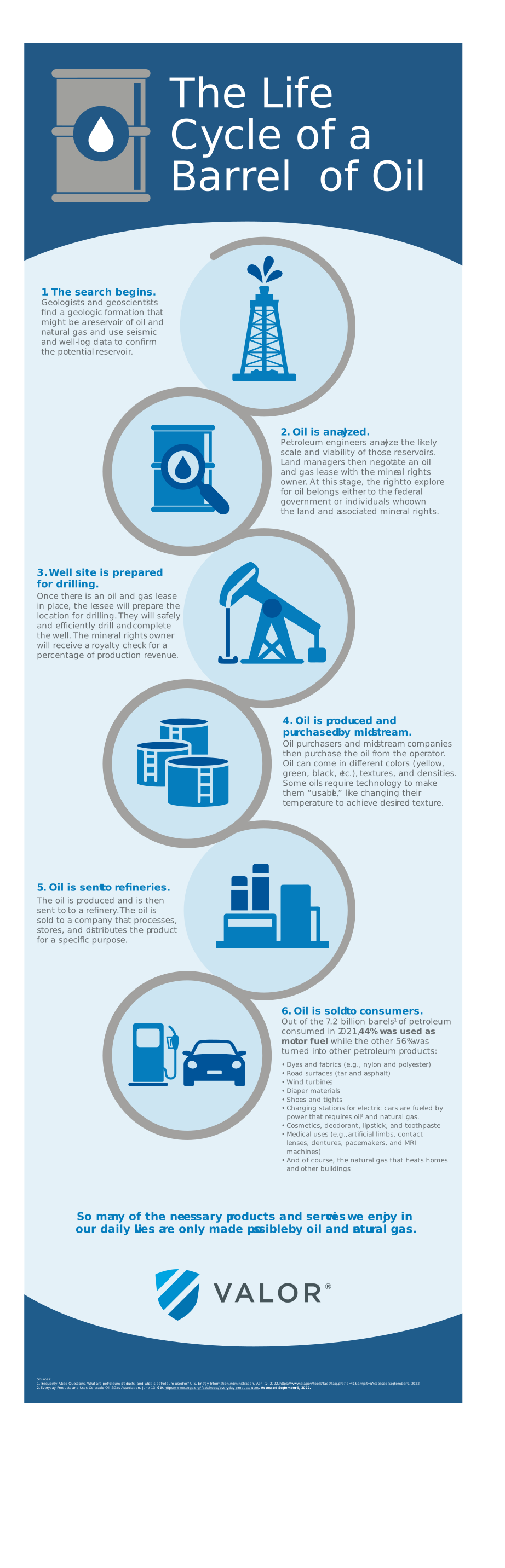
The life cycle of a barrel of oil {Infographic}

Oil is an integral part of our daily lives, however, getting the end products we use on a daily basis doesn’t happen overnight.

Here we take a look at the life cycle of a barrel of oil. From underground reservoirs to refineries to the products we use daily, oil is a key component in making up the details of our lives.

The Life Cycle of a Barrel of Oil

So many essential tools and items we use in our lives are made possible by oil and natural gas, whose story all starts in the ground beneath our feet.

To understand the life cycle of a barrel of oil, we first need to understand how it is found. 

The development process of oil is long and complex; oil and natural gas don’t “act” the way most people think. They’re not the same product from ground to gas pump or ground to crayon, as different oils have vastly different life cycles. To know what oil is used for and navigate the “end products” of plastics, fabrics, fuels, and the infrastructure surrounding them, we need to learn how oil is found, produced, and refined for use.

How is the oil first found?

The search for an oil deposit usually begins with identifying a geologic formation/reservoir that may hold oil and/or natural gas. In the old days, this could have been based on gut feelings, seeing a hill and thinking the subsurface may have a similar structure trapping oil, or other not-so-scientific methods. In the modern day, geologists have access to a lot of scientific information, including core samples, logs from previously drilled wells, and seismic data. They also can tap into research compiled by entities such as the USGS (U.S. Geological Survey) or state agencies that regulate oil and gas exploration/development.

Once a geologist has identified what they believe to be a potential reservoir, petroleum engineers are brought in to help analyze the likely scale and viability of those reservoirs. If it still looks like a winner, the next step is for the oil and gas exploration company (“E&P” company) to secure the rights to drill. This typically means sending a land manager (“landman”) to verify the ownership of the subsurface property and to negotiate a lease with the landowner(s) to create a drillable unit, or bidding on the rights for a federal lease for federally owned lands.

At this point in its life cycle, the oil belongs either to the federal government or individuals who own the subsurface rights (“mineral rights”). The lease will specify what percentage of the production proceeds go to the landowner. Its “value” at this stage is not yet fully known. Geologists and petroleum engineers can give estimates, but because of the massive amount of variables and unknowns — including the volatile nature of oil prices further down the line — the value will change countless times before oil is actually extracted and refined.

How is the oil produced?

The E&P company will prepare to drill once the leases are secured and the title is verified. This can be a long process, including selecting the drill site, permitting, preparing the drilling/pad site, and building the infrastructure (roads to and from the well site, pipelines, electricity, etc.) to safely and efficiently bring the product to market.

Once a well is drilled, more scientific tests, including core samples evaluation and well logs, are run to help determine if it will be viable to produce and estimate reserves. If it is approved for the next step, then the well is completed and (hopefully) produced. 

After the product is produced by the “upstream” E&P company and reaches the surface, crude oil’s current market value can be more reliably estimated and is sold to a “midstream” company. Royalty owners also receive a royalty check at this point of sale for their portion of the proceeds as specified in the lease. It is important to note that the E&P company bears the expenses of the entire process to this point — the royalty owners do not share in the costs. 

The midstream company then handles the transportation, storage, and marketing of the product to the “downstream” refineries or processors. 

What can be produced from this oil?

Once the oil comes downstream to a refinery or processing facility, it will be turned into usable products. 

Oil is refined into a myriad of products that are foundational for our everyday life, from gasoline to plastic. Crude oil varies drastically depending on where it came from and how it was formed. Some have high paraffin/wax content, which can be used for cosmetics or polishes. It can come in many different colors (green, yellow, black, etc.). It can be thick and viscous or light and runny. Each has its own best uses and can be refined to yield different end products. 

Now nearing the end of its life cycle, the barrel of oil has a more specific purpose and is on to an equally specific location based on its product type — to the consumer.

What do people use in their everyday lives that come from oil? 

There are too many individual products to name! Wherever you are right now, innumerable things around you will be made, at least in part, out of oil. But we can take a look at the main kinds of products that come from oil production.

Out of the 7.2 billion barrels of petroleum consumed in 2021, 44% was used as motor fuel and 20% as distillate fuel. The rest was turned into other petroleum products.

Fabrics and surfaces are one major example. Clothing fibers like nylon and polyester. Road surfaces like tar and asphalt. Tent fabric. Diaper material. Solar panels. Coverings and coatings and shells and packages. Shoes and tights. Not to mention the dyes used to color and pattern those fabrics. 

Even charging stations for electric cars are fueled by power that requires oil and natural gas. We also have oil to thank for cosmetics and other everyday products like deodorant, lipstick, and toothpaste. 

One of the most important daily uses of oil is medical use. From the artificial limb that helps someone to live a full life after an accident to contact lenses, dentures, pacemakers, and MRI machines, oil is refined and manufactured into these life-changing products.

Oil and natural gas are an integral part of our daily living, beyond the gasoline in our vehicles or the natural gas that heats homes and other buildings. So many essential tools and items making up the details of our lives are made possible by oil and natural gas.

Oil vs. Natural Gas: What’s the Difference?

Quick Answer: Oil (crude petroleum) is a liquid hydrocarbon used primarily for transportation fuels and petrochemicals. Natural gas is a gaseous hydrocarbon used mainly for heating, electricity generation, and industrial processes. Both are found in underground reservoirs, often together, but are extracted, processed, and marketed differently.
FeatureOil (Crude)Natural Gas
Physical StateLiquidGas
Primary UsesGasoline, diesel, jet fuel, plasticsHeating, electricity, cooking
MeasurementBarrels (BBL)MCF (thousand cubic feet)
TransportationPipelines, tankers, trucksPipelines, LNG tankers
Price BenchmarkWTI, Brent CrudeHenry Hub

Both oil and natural gas are important energy sources. While some applications overlap, each asset generally plays its own role in keeping the world going.

When many people hear the word “gas,” they tend to think about the gas that powers their cars. However, it is important that mineral owners learn the differences between types of gas and their varying purposes. After all, the applications and value of these assets depend on whether they’re natural gas or oil-producing mineral assets.

Examining Oil vs. Natural Gas

While they might seem similar, gasoline vs. natural gas is very different. Only the latter is a raw material. Gasoline, which is used to fuel automobiles and other devices that rely on internal combustion engines, is not a gas at all, but a liquid. Unlike natural gas, the end product is not found in nature — it’s a product refined from oil.

If minerals produce oil, then asset owners can take that crude oil and refine it into a variety of petroleum products. Gasoline is the most commonly known oil-derived product, but oil can also be distilled into diesel fuel and oil for heating homes. (Note: Heating homes via oil is less common and more expensive than using natural gas.) Additionally, oil can be used to create commonly used plastics and nylon materials.

On the other hand, natural gas is a literal gas found under the ground. It contains a number of different compounds that can be broken down using cracking plants. Propane and methane are two well-known natural gas products. In addition to heating homes, natural gas is most commonly used for cooking and grilling food, drying clothes, and generating electricity.

The bottom line: Both oil and natural gas are important energy sources. While some applications overlap, each asset generally plays its own role in keeping the world going.

How Valuable Is Oil vs. Natural Gas?

Of course, there’s another difference that asset owners need to consider: the financial value. When it comes to pricing, there are some significant differences between the market value of finished products and the oil and gas lease price per acre.

Unlike natural gas, oil tends to operate on a global market. This means that the value of one barrel of crude oil is often significantly higher compared to one unit of natural gas. It’s important to note that one barrel of oil is equal to about six units (where one unit equals 1,000 cubic feet) of natural gas, so the difference in value between the two isn’t as stark as it may seem.

The global reach of oil, however, also means that its price is much less stable than natural gas. Over the past few years, fluctuations in global supply and demand can have a significant impact on the cost of gasoline and other oil products. When managing an oil lease, it’s important to keep an eye on the market to make the most of assets.

Managing Oil and Natural Gas Assets

Now that we’ve covered the basic differences between oil and natural gas, it’s time to move on to some final vital questions: How would someone manage these assets? Does the management process vary between the two?

Whether land produces oil or natural gas, asset owners can make the most of what they have with the right team at their side. With a partner like Valor, managing oil and natural gas assets gets a lot easier. Valor has a variety of mineral asset clients, which means that we know what to do. And when asset owners aren’t stuck in the weeds, they can focus on other priorities while maximizing their revenues.